When thinking about Black cinema, what does your mind go to? You may think of any one of the countless films by the great Spike Lee, or even Ryan Coogler films. However, there are also an immense number of great films by Black filmmakers that seem to go unseen when compared to these giants. Here are some that I find especially phenomenal.
Starting off with a master of the American independent film: Charles Burnett. Coming from UCLA in the mid-to-late 70s, Burnett is a part of a generation of filmmakers that formed up the L.A. Rebellion film movement. The movement was going against what was seen in classic Hollywood films and offering a more real portrayal of the Black experience. The films of Charles Burnett all fit perfectly into what the L.A. Rebellion was all about. Despite this, his films have gone underseen due to distribution issues, and yet, are hailed as masterpieces among those who have sought them out.
This is especially true for his 1977 film, “Killer of Sheep.” Being the film he submitted as his thesis for his masters of fine arts at UCLA, it had a reputation of being some sort of lost classic until 2007. That year, the film would be blown up to 35mm and released in both theaters and DVDs. It would also gain some limelight when a still of the roof jumping scene in the film was used as the cover for Mos Def’s album “The Ecstatic” (2009). This is a film where the plot takes the backseat, as we are given a more atmospheric look of African-American life at the tail end of the Great Migration. It follows the daily life of Stan, a slaughterhouse worker who leads a dissatisfied existence marred by chronic insomnia and exhaustion. This film deserves its reputation, and is one that I highly recommend seeking out.
Thankfully, it is accessible. If you have a library card, you can check if they offer the streaming service Kanopy, which is free. If not, then you can also watch it on The Criterion Collection’s streaming service known as the Criterion Channel or even pick up a copy of the film on Blu-ray and 4K. Indeed, it has been a great time to get into Burnett’s films.
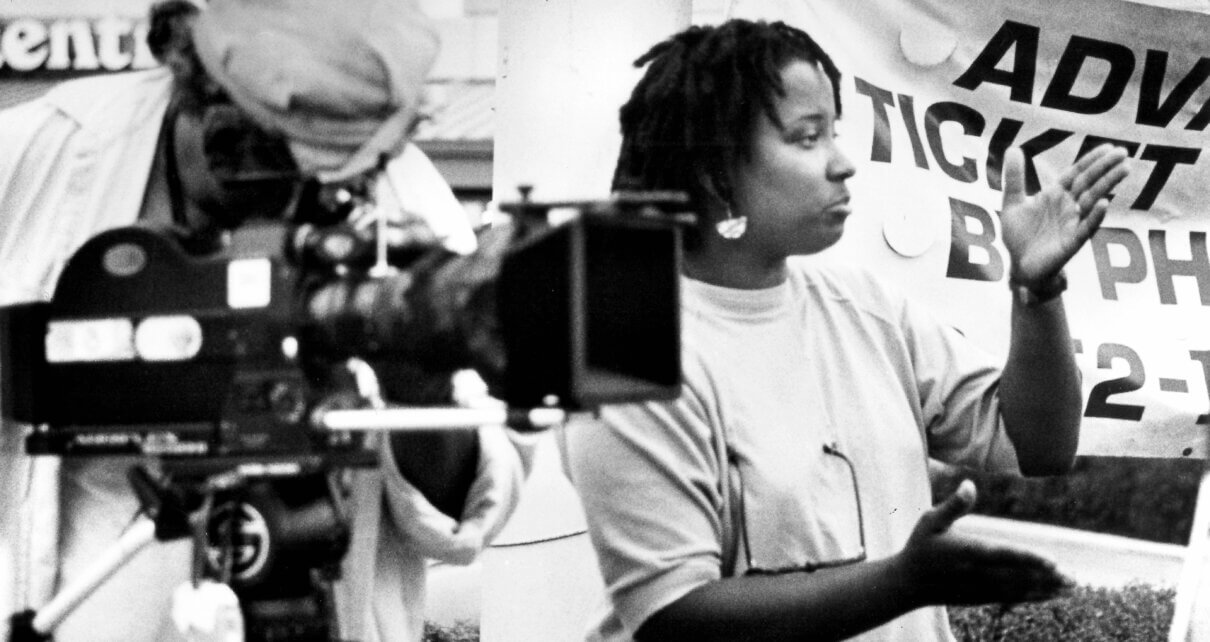
Another filmmaker from the L.A. Rebellion is Zeinabu irene Davis. She had gotten her masters in film and TV production in 1989, about 10 years after Burnett. Her films have lived on in even greater obscurity than Burnett’s, yet they are also worth watching. They mostly consist of narrative, experimental shorts and documentaries. However, the essential film of Davis’ career has to be her debut narrative feature film “Compensation” (1999).
This film had gone years in obscurity due to distribution issues. After premiering at various film festivals from 1999-2000, it had not gotten any form of home video release. In 2021, the film made its streaming debut on the Criterion Channel. Four years later, a new 4K restoration premiered and the film was finally released on Blu-ray & DVD. This film offers a look into the lives of a group that often goes unrepresented: deaf African-American women. It is a paralleling narrative of the lives of two women: Malindy Brown in the 1900s and Malaika Brown in the 1990s. These women go through the hardships of life in their respective time periods, whether it be the dreaded diseases of the time (Tuberculosis and AIDS) or through opposition in doubt of a relationship between a deaf woman and a hearing man working out. The two women are both played by actress Michelle A. Banks, who director Davis picked after seeing her in a performance of “Waiting for Godot.” There are some very creative stylistic choices in the film, such as Malindy’s portions being shot and presented like a silent film. “Compensation” is undoubtedly a masterpiece of American independent cinema, and thankfully, it has been made more accessible due to its restoration and release. I highly recommend this film, it deserves a wider audience.
The last filmmaker I want to touch upon is Berlin-based Mosotho filmmaker Lemohang Jeremiah Mosese. Unlike Burnett and Davis, Mosese’s films were never lost to time, but they were definitely mainly seen among film festival attendees and movie critics. However, he is possibly even less known among American film fans than those two are. His 2019 film “This Is Not a Burial, It’s a Resurrection,” film follows Mantoa, an 80-year old widow near the end of her life who finds a new reason to live in resisting a dam project and keeping the land of her people.
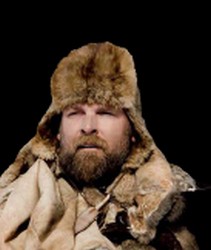
Therein lies the central theme of the film: tradition vs modernity. This film may be harder to get into compared to the other two because it’s undoubtedly an “art” film. The film is visually stunning and the usage of music is powerful. Spearheaded by a tour de force performance from the late Mary Twala-Mhlongo, the film is a very visceral tale about culture and land. It is available through the Kanopy streaming service.
Of course, there are countless other films I could’ve mentioned, but these are three I feel deserve to be seen by more than just critics and the huge film-buff crowd. Now, more than ever, is a great time to celebrate Black History Month through these films.