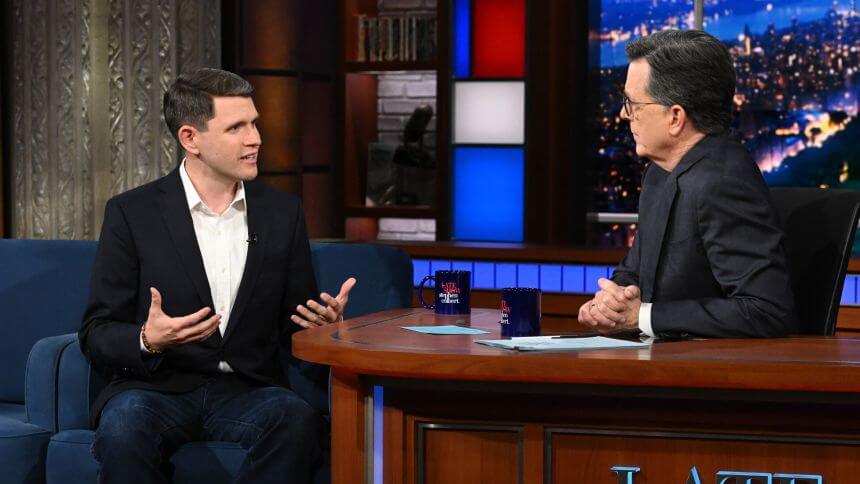
On Feb. 16, late-night host Stephen Colbert informed viewers that CBS lawyers “advised in no uncertain terms” against airing his interview with Texas State Rep. James Talarico, a Democratic candidate for U.S. Senate. As first reported by the Associated Press, Colbert characterized the move as “corporate capitulation” to regulatory pressure. During his monologue, Colbert noted that while Talarico was scheduled to appear, the network told the show they could not include him on the broadcast, according to the Texas Tribune.
CBS disputed this characterization the following day, clarifying that no official government order had been issued to block the segment. According to CBS News, a network spokesperson stated that the show was not prohibited from airing the interview but was instead provided “legal guidance” regarding the FCC’s equal-time rules. As reported by PBS NewsHour, the network maintained that The Late Show opted to move the segment to YouTube rather than risk triggering requirements to host Talarico’s political opponents.
The controversy escalated on Feb. 18 during a news conference in Washington, D.C. As reported by The Guardian, FCC Chairman Brendan Carr confirmed the agency had taken no action against Colbert, dismissing the outcry as a “hoax.” According to Fox News Digital, Carr told reporters that the situation encapsulated why the public has “more trust in gas station sushi than they do in the national news media.”
However, Carr did confirm an active enforcement action against ABC’s The View. Al Jazeera reports that FCC Commissioner Anna Gomez has pushed back against these moves, arguing in a public statement that the threat of regulatory inquiries is part of a broader campaign to censor speech and “bring these broadcasters to heel.”
At the center of the dispute is Section 315 of the Communications Act of 1934. According to a Jan. 21 public notice from the FCC’s Media Bureau, the agency stated it had seen “no evidence” that current late-night shows qualify for the “bona fide news” exemption that historically protected them. This shift is significant for Colbert, whose show is scheduled to end in May 2026.
Students at Monmouth University expressed differing views on the issue. Senior business administration major Riley Denker said equal-time rules make sense in traditional news but are complicated in entertainment. “I think that news should generally be unbiased… but for talk shows or comedy shows it’s a little tricky,” he said. Denker described CBS’s decision as “both a business-minded and politically charged decision.”
Junior graphic design major Dan Martin suggested the situation reflects broader political tensions. “Given our climate, it’s definitely more political,” Martin said. He noted that broadcast regulation is becoming less relevant to his generation. “YouTube is way more significant with younger demographics… I never watch late night on TV,” he added.
According to the Associated Press, Talarico’s campaign reported raising $2.5 million following the incident, with the candidate calling the move a dangerous form of “cancel culture.”
The episode follows long-standing friction between Colbert and CBS’s parent company, Paramount. Last year, Colbert publicly criticized a $16 million settlement between Paramount and the Trump administration, labeling it a “bribe” intended to smooth over the company’s $8 billion merger with Skydance. Following the merger’s approval, TV Technology reported that Skydance provided the FCC with written assurances that its networks would maintain fair and fact-based coverage.
As the 2026 election cycle continues, debates over how federal media regulations apply to digital distribution remain a central point of contention in the national conversation on free speech.