For many college students, spring break is a chance to relax after weeks of classes. Unfortunately, for some Monmouth University students, returning from vacation meant long delays, canceled flights, and unexpected expenses as the federal government shutdown disrupted travel during one of the busiest periods of the year.
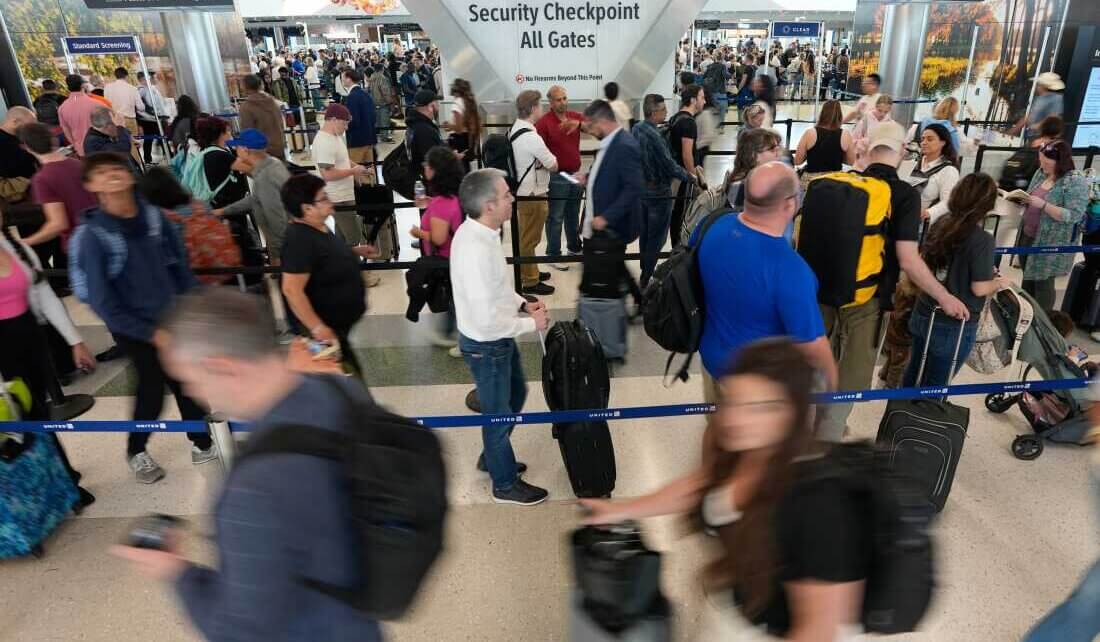
The shutdown affected agencies under the U.S. Department of Homeland Security, which oversee airport security through the Transportation Security Administration. While TSA officers are essential workers and continue working during a shutdown, staffing issues and coordination problems can ripple through the travel system, especially during high-volume periods like spring break. Airlines also face disruptions when staff shortages and delayed flights compound, leading to long lines and missed connections.
Stephen Chapman, an Associate Professor of political science at Monmouth University, said government shutdowns occur when Congress can’t reach an agreement on federal funding for agencies.
“A government shutdown is when Congress cannot agree on funding for all or some government agencies,” Chapman said. “We are currently only in a partial shutdown, mainly affecting the Department of Homeland Security, which includes the TSA.”
Gia Nosti, a sophomore majoring in health promotion, felt those effects firsthand when her flight from Fort Lauderdale to Atlantic City, New Jersey, was repeatedly delayed before being canceled.
“They delayed my flight seven times and then canceled it at 3:30 in the morning,” she said. Passengers were given different reasons for the delays throughout the night. “First it was the weather, then no pilot, then no plane,” Nosti said. After waiting overnight, she couldn’t retrieve her luggage, and no alternative flights were available.
With no flights available, Nosti rented a car to drive home, a costly solution for travelers under 25. The rental company charged an extra daily fee, bringing the total to over $1,400.
Chapman said the shutdown also created challenges for TSA staffing because many agents were initially working without pay.
“Many TSA agents were going unpaid, forcing some who live paycheck to paycheck to seek other employment,” Chapman said. “That can lead to staffing shortages and longer wait times at airport security checkpoints.”
Experts say shutdowns can also raise broader concerns about how federal agencies maintain operations during political gridlock.
Criminal justice experts note that operational disruptions can also create concerns about security at major transportation hubs.
Professor Kinard, a criminal justice professor and former member of law enforcement, said these disruptions can introduce real risks even when core operations continue.
“These shutdowns can pose significant security risks, as critical operational needs are typically met, but essential support roles are diminished or eliminated,” Kinard said. “Understaffed critical areas, such as Border Security and the Transportation Security Administration (TSA), create specific security risks, enabling planned attacks and other malicious activities. Most agencies mitigate these risks through personnel reassignment, temporary suspension of non-critical functions, and personnel reassignment.”
The TSA, in particular, has faced scrutiny during past shutdowns. While officers are essential workers, understaffing can lead to longer lines and slower processing times. Travelers during busy periods like spring break, already dealing with packed airports, may find even minor delays stressful.
Other travelers experienced frightening moments beyond delays. Sara, a traveler from Bergen County returning from Montreal, said her flight initially seemed routine before turbulence intensified near the end of the trip.
“Relief hit me when we landed,” she said. “Then the force of the brakes hit everyone on the plane.”
Sara said the sudden stop caused panic among passengers as the aircraft came to a violent halt. She realized something was wrong when the impact threw her forward into the seat in front of her. “It all happened in a split second,” she said, describing the moment as shocking and disorienting.
Passengers quickly began evacuating the aircraft, climbing out through the exit and using the wing to reach the runway below. Once outside, travelers were left standing on the tarmac while waiting for instructions from airport staff. Sara said passengers stood in cold rain for nearly 30 minutes before being directed to a covered area.
“There was little to no leadership from workers or police,” she said. During the confusion, according to Sara, passengers relied on one another for support, helping guide people off the plane and checking on those who appeared shaken. “It was one of the most chaotic and traumatic experiences of my life,” she added.
Emergency crews eventually escorted passengers to a covered area inside the airport, where they waited several hours before being cleared to leave. Despite the frightening situation, Sara said the experience also showed how strangers supported one another during the emergency.
Travel disruptions during the shutdown were not limited to flights returning from spring break destinations. Flights across the country experienced delays and cancellations, creating a domino effect throughout the airline system and leaving travelers stranded or scrambling to make alternate arrangements.
Looking ahead, Chapman said preventing similar disruptions ultimately depends on lawmakers reaching funding agreements more consistently, though the political realities of Washington often make those compromises difficult.
“Congress retains the power of the purse,” Chapman said. “Members of Congress are often strategic, and much of their behavior is influenced by reelection concerns, which can make budget compromises more difficult.”
As spring break travel continues, situations like these demonstrate how political gridlock in Washington can ripple far beyond the nation’s capital, affecting airports, airlines, and everyday travelers nationwide. For many college students, spring break is a chance to relax after weeks of classes. Unfortunately, for some Monmouth University students, returning from vacation meant long delays, canceled flights, and unexpected expenses as the federal government shutdown disrupted travel during one of the busiest periods of the year.