
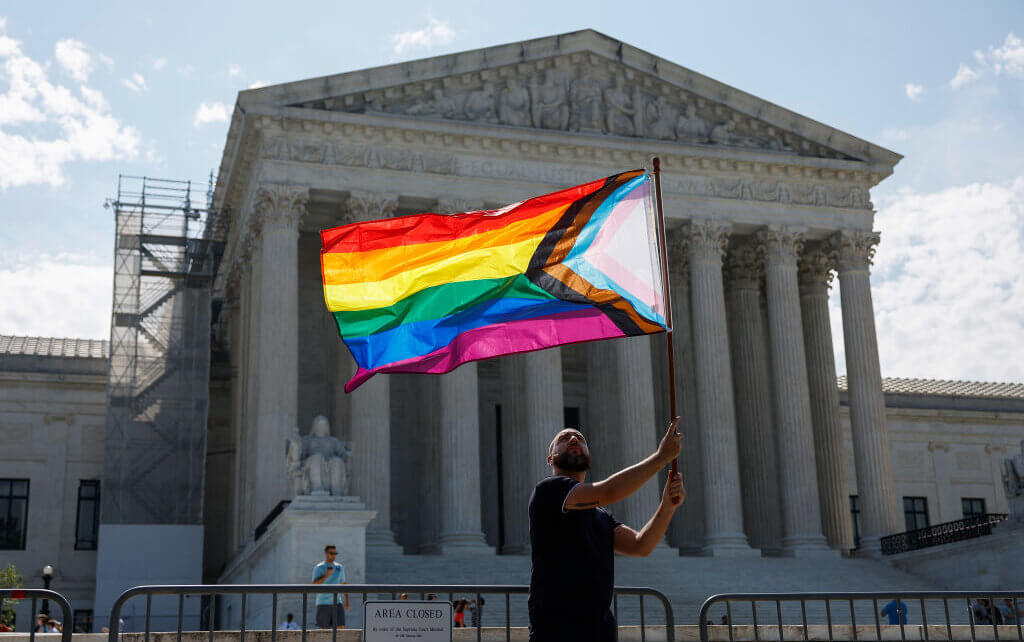
O n March 31, 2026, the U.S. Supreme Court ruled 8-1 against a law in Colorado that prevented mental health professionals from providing “conversion therapy” to minors, in the case Chiles v. Salazar. The focus of the case centered on whether or not the state, or the government in general, could restrict licensed mental health professionals from having counseling conversations aimed at changing or altering a minor’s sexual orientation or gender identity. In short, the court did not rule on the legality of conversion therapy itself, but only against the governmental restrictions against it.
According to the American Psychological Association (APA), “conversion therapy” refers to, “attempts to change a person’s sexual orientation, gender identity, or related behaviors.” The APA goes on to explain that the practice of conversion therapy originates from the “scientifically discredited belief that being LGBTQ+ is a mental illness that should be cured.”
Kaley Chiles, a licensed counselor, challenged the 2019 law, stating that the ban discriminates against her based on her views that she expresses through her talk therapy. The Supreme Court of the United States’ (SCOTUS) blog reports that Chiles argued she wasn’t attempting to “convert” her clients, rather, she was helping clients “with their stated desires and objectives in counseling, which sometimes includes clients seeking to reduce or eliminate unwanted sexual attractions, change sexual behaviors, or grow in the experience of harmony with one’s physical body.”
The Supreme Court ruling argued that the Colorado law, which prevented mental health professionals from certain speech, due to the ban on conversion therapy practices or phrases, had violated the First Amendment, and sent the case back to lower courts. Justice Neil Gorsuch, part of the majority in deciding to rule against the Colorado law, stated that the law that regulated what counselors and therapists could say, “censors speech based on viewpoint.” Gorsuch went on to acknowledge the dangers associated with regulations that may discriminate based on someone’s point of view. “When the government seeks not just to restrict speech based on its subject matter, but also seeks to dictate what particular ‘opinion or perspective’ individuals may express on that subject, the violation of the First Amendment is all the more blatant.”
The state of Colorado contended that the conversion therapy ban targeted physical conduct or medical treatments, rather than speech, but the majority rejected it, with Gorsuch stating that Chiles “seeks to engage only in speech, and as applied to her the law regulates what she may say,” including, “what views she may and may not express.”
Gorsuch concluded, “Colorado does not regulate speech incident to conduct; it regulates ‘speech as speech.’” The only dissenting opinion of the Supreme Court was that of Ketanji Brown Jackson, who provided a 35-page dissent stating that Colorado, among 25 other states, banned conversion therapy for minors because of the consensus among medical professionals that conversion therapy and its practices are “ineffective and harmful.” Jackson says that when “a healthcare professional’s speech is not being targeted ‘as speech’ (because it conveys an idea) but is instead ‘incidentally’ restricted due to a state’s otherwise legitimate regulation of the medical treatments being offered to patients, heightened scrutiny is not warranted.”
Almost 700,000 people who identify as LGBTQ+ in the U.S. have reported receiving conversion therapy at some point in their lives, half of them being adolescents, according to the Williams Institute. Greater risks of suicidality have been reported in LGBTQ+ people who underwent conversion therapy compared to LGBTQ+ people who have not experienced it, approximately 75% higher odds of planning a suicide and 88% higher odds of attempting suicide, and the odds of both statistics are even higher for transgender people. Transgender people especially may be affected negatively by this ruling, as there are currently 762 bills in consideration across the country that could impact access to healthcare and mental health services for transgender people. According to the Lemkin Institute for Genocide Prevention, the U.S. is in the early to middle stages of a genocidal process against trans people, due to allowance of practices like conversion therapy and the passing of bills that affect transgender people in negative ways.
After the Supreme Court decision to rule against the restrictions on conversion therapy practices from the Colorado law, such as in the case of Kaley Chiles, some people that don’t support the Court’s ruling believe that it will open up more opportunities across the country for lawmakers to allow the practice, even in states that offer more support for LGBTQ+ individuals. Additionally, some believe that the allowance of conversion therapy practices through the ruling will more harshly affect LGBTQ+ adolescents and children, since adolescents have few options to make their own mental health or medical decisions, and may be forced to undergo conversion therapy if their family places them into it.
However, some also say that the Supreme Court acted justly in their decision due to the narrow scope of the ruling. Seth Chandler, Professor of Law at the University of Houston, stated that the ruling was fair.
“Colorado took sides,” Chandler said. “Where it said it’s fine with us if you want to engage in gender-affirming speech, but we are going to prohibit you from engaging in ‘rethinking your sexuality’ speech.” Chandler argues that, because the decision was based on whether or not the Colorado law violated the First Amendment (which the Supreme Court said that the Colorado law had done), the ruling was ultimately the right decision. “This ruling from the Supreme Court enrages me, as conversion therapy has been proven time and time again to be harmful and detrimental to people’s mental health, and comes from a fundamental misunderstanding of gender and sexuality.” Ky Gray, vice president of the Monmouth University Pride Club, shared their opinion on the recent ruling. “Studies show its negative impact, and conversion therapy is denounced by many major mental health organizations as dangerous and pseudoscience. I think the Supreme Court has failed people, especially children, by defending this in the name of free speech. Freedom of speech is not freedom to harm others.”
Gray continued, “While I think adults who choose to go to conversion therapy instead need therapy dedicated towards accepting this natural part of themselves and unpacking why they think this part of them is wrong, I guess it is their prerogative as adults if they personally believe this is something changeable that they wish to try to change. However, considering many minors are forced to go to conversion therapy by their parents, who are usually religious and believe being gay to be a sin, it hurts to know the Supreme Court has chosen to protect these practices over their safety.”