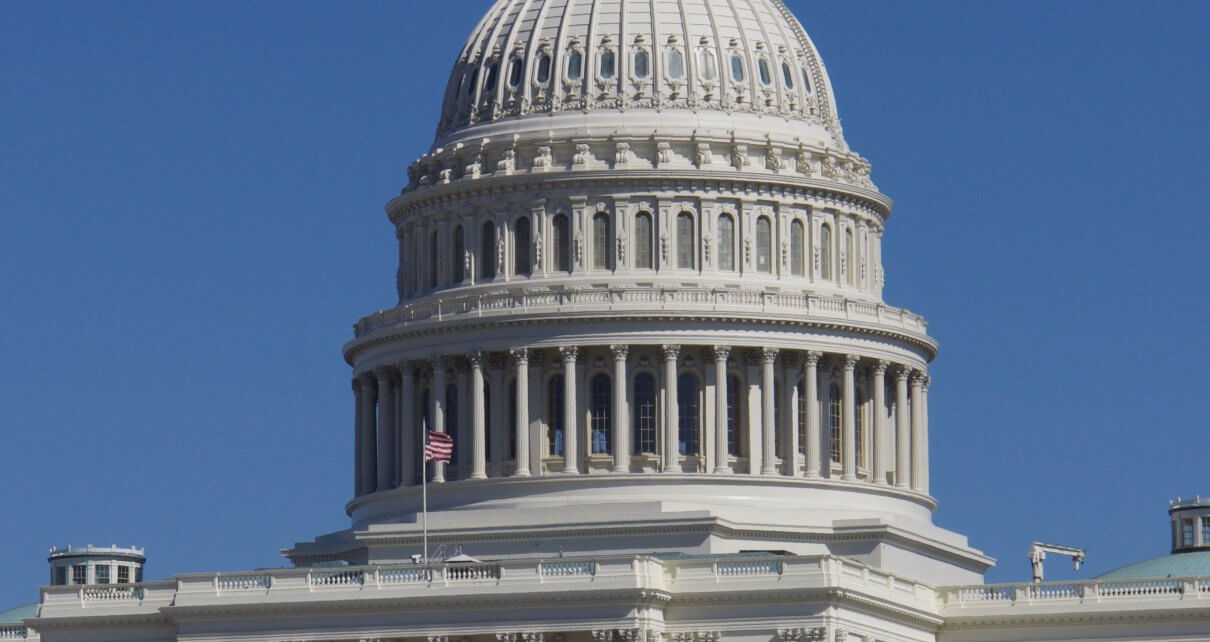
The 2026 midterm elections shifted the balance of power in Washington. According to CNBC, Democrats were projected to win control of both the House and Senate. Democrats were also projected to hold a majority of governorships. According to the Associated Press, as of Nov. 8, Democrats had flipped seven Senate seats, 44 House seats and five governorships, bringing their totals to 54 Senate seats, 254 House seats and 28 governorships.
The midterms produced several historic firsts, according to PBS News. Democrat Deb Haaland was elected New Mexico’s first Native American woman governor. Minnesota Lt. Gov. Peggy Flanagan, a Democrat, became the first Native American woman elected to the U.S. Senate. Democrat Keisha Lance Bottoms became the first Black woman elected governor of Georgia. Democrat Abdul El-Sayed of Michigan became the first Muslim elected to the U.S. Senate, and Democrat Chris Pappas of New Hampshire became the first openly gay man elected to the U.S. Senate.
Maryland Gov. Wes Moore, the third Black governor in U.S. history and the only Black governor currently in office, won reelection. Florida Republican Byron Donalds, Wisconsin Democrat David Crowley and Nevada Democrat Aaron Ford were elected as the first Black governors of their respective states. Democrat Gina Hinojosa was elected as Texas’ first Latina governor, and Democrat Xavier Becerra was elected as California’s first Latino governor since Romualdo Pacheco, who served in 1875.
The results also ended long losing streaks for Democrats in some states. James Talarico became the first Democrat elected to the U.S. Senate from Texas since 1988. In Kansas, Adam Hamilton became the first Democrat elected to the U.S. Senate from the state since 1932.
“Democrats are on track to win the largest House majority since 2008,” said political commentator and lawyer Leeja Miller, on her podcast. “That year [2008], they won 257 seats.”
The results marked a shift from the 2024 election, when Republicans won both chambers of Congress and Donald Trump won the presidency. The GOP’s losses raised questions about why the party lost voters and what it should do next.
“There needs to be some self-reflection for Republicans,” Rep. Marlin Stutzman, R-Ind., told Politico. “There should be some heads rolling at the White House because we lost badly.”
Vice President JD Vance addressed the Republican losses in a social media post.
“The reason we lost is the war,” Vance said, as reported by CBS News. “If you’d like to argue it was worth it, that losing the Senate for the next 6 years was worth it, then do so. Argue it was a worthwhile cost to pay. But everyone knows why we lost. And any honest conversation about where we go from here must start there.”
Kaia Hubbard, a politics reporter for CBS News, outlined several possible reasons for the GOP’s losses.
“As Republicans tried to rally support around their accomplishments over the last two years, the president’s war in Iran loomed large,” Hubbard wrote. “And in this week’s elections, its impact on the economy and prices appeared to overshadow most everything else … Voters nationally said cost of living was a major factor in their vote … [and] some Republicans also pointed to an over-emphasis on culture war issues.”
“This is close to an extinction-level event for Republicans in many parts of the country, as we have seen, probably in the last 100 years,” outgoing Florida Gov. Ron DeSantis said at a news conference.
DeSantis said some Republican candidates focused on issues from past elections, such as transgender youth participation in sports.
“Republicans, it seemed like — in some of the ads I was seeing, with how much money they were spending — they really were fighting yesterday’s battles,” DeSantis said. “That was not the issue motivating voters, and it was kind of like an attempt to just scare Republicans to vote.”
The results also raised questions about what made the Democratic Party’s message more appealing to voters.
“Talk of ‘affordability’ dominated the election cycle more than any other issue,” wrote Boston Review, a political and literary magazine. “On the campaign trail, Democratic candidates hammered home to voters the effects of Trump’s policies on their grocery prices, fuel costs, and energy bills.”
Rep. Hakeem Jeffries, D-N.Y., who recently launched his bid to become the next speaker of the House, discussed the Democratic Party’s plans in a speech.
“In the new Congress, we will aggressively fight for an affordable America,” Jeffries said. “Life is way too expensive, and millions of hardworking taxpayers are drowning in this failed economy.”