Last semester we were informed by a source from the Guggenheim Memorial Library, who wishes to stay anonymous out of fear of retribution, that they noticed mice and a lack of sanitary conditions in the library.
After research and realization that this has been a recurring issue over the years, we set out to investigate the severity of this issue.
On Mar. 27, 2013 The Outlook published an article titled, “Norwegian Rat Found in Maplewood Hall” where a Norwegian Rat was found in the bathroom of Maplewood Hall apartment 2D.
After getting rid of the rat themselves, Carmine Ruocco, who was a resident in apartment 2D informed the Vice President for Student Life, James Pillar, Ed.D, who then called facilities to have an exterminator come in. Following the incident, Vice President for Administrative Services at the time, Patti Swannack, said the exterminators had been there every day placing rat poison around the residential buildings since the rat was found on Mar. 10.
Megan Jones, director of housing operations, said she believes the rat made it inside the apartment because of their door being propped open.
According to the 2013 article, Carlos Guevara, who got the call from his roommate, Michael Wick, regarding the rat, said he had heard stories about rats being on campus before, “If there was a problem and the University was aware of it, then it should have been handled sooner.”
On Feb. 13, 2019 The Outlook published an article titled, “Mice in Elmwood Residential Hall” after a video of residents encountering a dead mouse circulated Instagram on Feb. 1 accumulating over 9,800 views.
The first report of mice in Elmwood was on Jan. 22 after students had noticed their power bars eaten, according to the 2019 article. Residential Life requested an exterminator to treat the area, including the areas of Elmwood that mice were spotted in the previous semester, after a second sighting days later.
Seven years later, these repeated occurrences have been brought to The Outlook’s attention.
Reagan Dunn who is a senior history major currently lives in the Great Lawn Apartments, in the same building and same room as he did his junior year. “We only got a mouse once I think,” he said, referring to last year.
This year, Dunn has been face to face with more than one, explaining that they have been dealing with mice in their shared bedroom as well as the entire apartment as a whole throughout the end of last semester into the beginning of this semester. He reflected on the first encounter this year, when his roommate sent a message in their dorm group chat that there was a mouse in the bathroom. Friends and residents from the building came by to help get it out of the bathroom. “Immediately after they left, in about three minutes, I was sitting on the couch in the common area and another mouse went from under the couch, and bolted out into the kitchen,” Dunn said.
In an attempt to trap the mouse, he and his roommates got traps and bait but Dunn said it never worked. Following this attempt, he was messaged by a resident assistant (RA), addressing the issue he was having with mice. He believes at that point, a work order was put into facilities at the end of last semester.
Once back from winter break, Dunn said he figured when he returned to his apartment he was sure the mice had been dealt with. “Lo and behold, within two days of being in the apartment my roommates had seen some mice, again,” Dunn said.
It was around the end of January when Dunn knew this was going to have to be dealt with and was told by an RA to contact Tony Conard, Area Coordinator for Apartment and Campus Living, who responded to Dunn in less than a day and told him they would have exterminators there as soon as possible. “I know exterminators had been there like the week before to deal with mice in another building or another room, but I had still seen mice in my apartment,” Dunn added.
“It was around that time where I had two friends over, and we were going to be in the common area but the mice just kept running out of places. They were running out of corners, running out of the couch, one of them jumped onto the couch at one point. I’m like this is too much,” said Dunn.
Miles Humphrey, junior communication major, and Dunn’s suitemate said, “In my opinion I feel like Monmouth and faculty should have over break swept all the apartments. It would make more sense to get that out the way…it’s not fully on them but their part is to make sure the students are taken care of, health and mentally. And on our part students should at least try to be clean so they can combat that. I still feel as though since we are at a good institution they should be consistent and diligent.”
The exterminators came by the end of last week, and Dunn said he has not seen any since. “Hopefully it stays like that, dealing with mice is never fun but luckily res life and everybody involved was very nice about it and have been very proactive,” Dunn concluded.
Jones, who has been working for the university since 2000, receives all the work orders that come in, including anything that has to do with facilities and housing operations. She said they are very aware of the situation and it is something they are prepared to deal with.
Jones explained how they try to be transparent with students and parents about situations that they are going through, “Because what are you hiding behind? If you are hiding behind something there is obviously a problem, so we try to be as open and honest as we can.”
In the case of a mouse, Jones said that Action is called, an outside contractor the university uses for exterminating. Action already comes out twice a week, Tuesdays and Fridays, to do ongoing maintenance even if students don’t have issues, and depending on the severity of the issue can make additional trips.
Jones said things like the cold, rain, and even construction in surrounding areas could cause mice to find their way inside. “It is not unusual every now and then to get a problem but we have never had an infestation or anything like that,” Jones said.
Timothy Orr, Executive Director for Campus Planning and Facilities Management said, “For 2026 we only have 1 report of rodent activity in the residence hall area.” Orr explained how facilities has also taken the steps such as filling any gaps or holes found in the exteriors of buildings.
Pillar said there are many factors that contribute to mice getting inside such as residential environments, building characteristics, and daily living practices. Pillar said that students play an important role in prevention and encourages students to:
- Properly storing food in sealed containers
- Promptly disposing of trash and food packaging
- Cleaning up crumbs and spills in living spaces
- Reporting concerns early through the work order system and to Residential Life.
Along with students spotting mice in the on campus accommodation, students have reported seeing mice in the dining hall.
Annika Jantz, a junior communication major, saw a mouse in the dining hall during the 2024 spring semester while waiting in line for the sushi bar. She said, “I was there and I saw a mouse right across the floor on the other side of the room, and it was like running toward my side of the room, and I was terrified and nobody else saw it, and I was just sitting there squirming, waiting for my sushi.”
She continued, “I was just a little on edge. I didn’t care about the food because I know most food places have mice, so it’s not that big of a deal. I was just more scared of encountering one myself.”
Abigail Montanez, a sophomore communication major, reported seeing a dead mouse in the dining hall during the last academic year. “When I saw the mouse I was immediately grossed out because it was in the dining hall. I was with friends just sitting at one of the picnic benches and I looked down for a split second and saw a dead mouse,” She said. “I lost my appetite once I saw the mouse … it one hundred percent affected how I felt about the dining hall on campus because that is supposed to be a place where I shouldn’t even have to worry or think about the cleanliness when that should be an immediate given that cleanliness is their top priority.”
Sydney Rosalsky, a junior communication major saw a mouse in the dining hall during the spring 2025 semester. Rosalsky told The Outlook that the mouse was bleeding and trying to crawl across the floor when a member of the custodial staff attempted to step on the mouse. She said, “At first I was a bit grossed out with the mouse but then it just made me really sad because it was helpless and it was still pretty cold out so it probably just wanted shelter and instead it found itself in a very unfortunate situation.”
We reached out to the General Manager of Gourmet Dining to gain insight into the issues reported by students, and how they may have been addressed, but we did not receive a response.
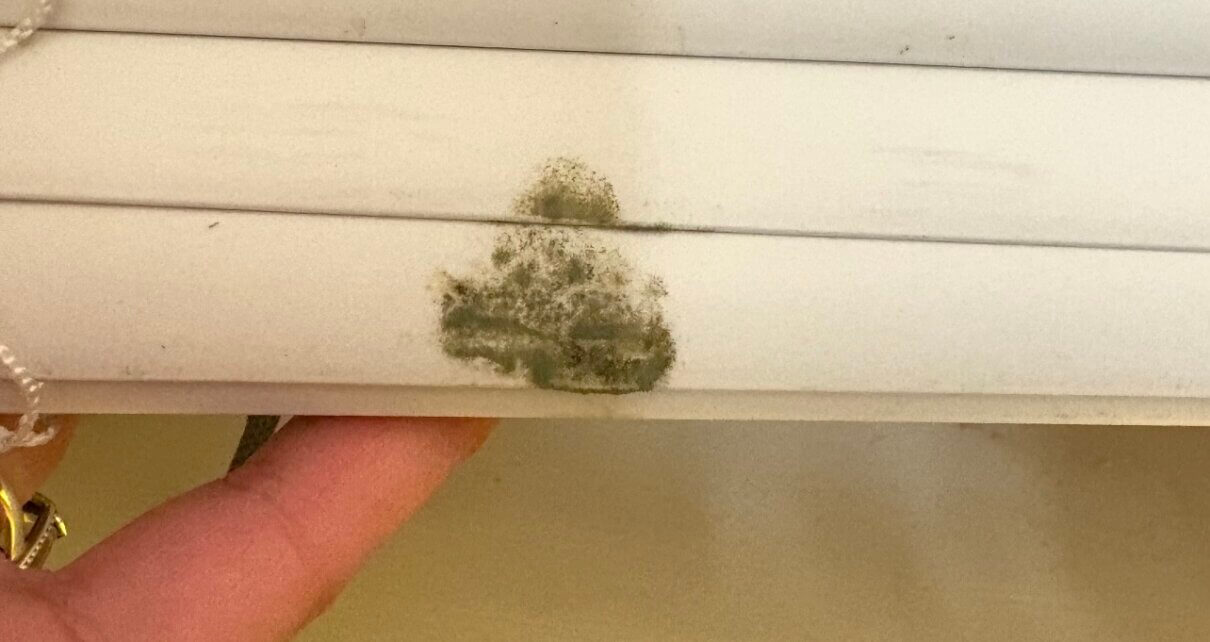
On Oct. 24, 2023 The Outlook published “Mold Testing in MU Dorms” addressing the concerns and health issues students were facing in Hesse Hall.
On Sep. 23, 2025 an RA on duty submitted a work order regarding mold on a shower curtain in Hesse Hall. The first week of October, air quality testing was done. Jones said, “I’m not an expert in this but they compare it to the levels that are outside. If the levels come back less than the levels that are outside then it’s not an issue.”
Following this incident, she said facilities continued to check the bathroom more, sending more supervisors over.
A former RA in Hesse Hall, Eliana Duarte, said her room was fumigated, tested, and then fumigated again after the mold was found on the shower curtain.
In October 2025, Duarte tested positive for having black mold in her system and for having an allergy to black and green mold. She told Residential Life she would no longer be an RA mid-December.
The former RA went to the Health Center the third week of September. “They told me they weren’t able to help me there. They don’t have mold testing or a mold expert and were confused about what to do with me because I work for the school, but I am also a student,” she said.
The Health Center then directed the RA to Corporate Care at Monmouth Medical Center. Here, Duarte was given a basic assessment where they checked her vitals, she also received a chest x-ray. A follow up appointment was made with an immunologist. On top of the care she received at Monmouth Medical Center that was covered by Monmouth University, she sought private healthcare as well.
“I don’t feel like this is inherently Monmouth’s fault, this can happen anywhere, and I’m making my peace with it,” Duarte said.
Brendan Sheehan, president of the Monmouth University Student Government Association expressed his concern, however he has been largely unaware of these issues.
“Any report of mold or rodents in residence halls should be taken seriously and addressed quickly. As recently as this week, I spoke with both the Vice President for Student Life and an official in the Office of Residential Life regarding a report of mold in one building. In separate meetings, they both informed me that the University contracted an outside company to conduct mold testing in the reported building, and every single test confirmed safe and sanitary living conditions. Additionally, it was shared that the Resident Assistants (RA’s) in this building were not aware of any mold issues. If students have concerns about cleanliness, mold, or mice, they should immediately report them to their RA, contact the Office of Residential Life or report it to the SGA through our Student Feedback Form,” Sheehan said.
Kylie Feeney, a sophomore marine and environmental biology and policy major, was eating in the Magill Commons Dining Hall on Jan. 21, and discovered insects in her food. “… about halfway through eating my burger, I noticed there were weird spots on the burger. After looking at it I realized the lettuce had insects in it,” she said.
Following the incident, Feeney directly messaged Gourmet Dining through their Instagram account explaining the situation and attached pictures. She received the following response, “Hi Kylie, thank you for bringing this to our attention. We have made our culinary team aware. I apologize for your experience dining & I’m going to put $10 declining dollars in your account. Please let us know if you need anything else!”
This is not the first time Feeney experienced similar issues when dining on campus, not only in the Dining Hall, but at the Food Court in the Rebecca Stafford Student Center. She explained, “I have had similar experiences to this before. I have gotten bugs in my food before but I was so fed up so I had to say something. I also have gotten hair in my food from my bowls at Copperhead Jacks. I also have heard from others that they have had food with both hair and bugs in it before.”
Feeney cited that she expects a high quality of food for the price she pays to attend the university. She concluded, “I was glad that they answered quickly, but I hope that they actually acknowledged the problem and began to care about the quality of the food students are eating instead of trying to appease me with 10 declining dollars. I just want to make a difference because me, as well as everyone I have talked to, want better food from Monmouth University.”
Dr. Patrick F. Leahy, President of Monmouth University said, “The senior administration and I are aware of reports of mice and insects in some of our buildings. Please rest assured, the prompt remediation of these issues is a top priority for our facilities, food service, and residential life teams, and we are committed to resolving the issue quickly. If you have specific concerns, please reach out directly to our Vice President for Student Life, Dr. Jim Pillar.”
The Student Government Association sent out a student feedback form for the student body to voice concerns, make complaints, or comment on the various departments of campus. 72 students filled out the form. 45% of responses were in regard to dining on campus, 9% about campus facilities, and 8% about residential living. However, Sheehan said that only four submissions (5.5% of total reports) were related to sanitary conditions or cleanliness.
Students in the anonymous form reported that they have experienced bugs in their food and have been served undercooked chicken at the grill station.
Pillar responded to food-related concerns, “The University’s dining partner, Gourmet Dining, follows strict food safety and inspection protocols. On rare occasions, insects may be present in fresh or frozen produce, a known and industry-wide issue associated with minimally processed fruits and vegetables. This year, the Office of Residential Life documented two such incidents—one involving fruit and one involving vegetables.”
He added, “In response, the University has instructed that Gourmet Dining review its procedures to ensure best practices are consistently followed and to identify any opportunities for improvement.”
Going forward, Orr said continual building inspections and repairs will be addressed as well as continual cleaning and reducing of humidity levels where needed.
Jones emphasized making sure they are on top of things and that they continue to take things of importance seriously, “Which we do because students pay a lot of money to go to school here and you expect to have a fantastic experience and we want you to have a fantastic experience.”