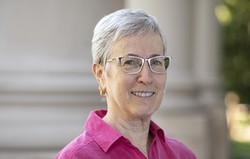
The expanding Criminal Justice Department moved faculty offices this past summer to the first floor of the Plangere Center. The move caused the relocation of the World Languages and Cultures Department and took over space from the former Polling Center.
David Golland, Dean of the School of Humanities and Social Sciences, said, “Criminal Justice had been advocating for better space for years, around last year, the middle of fall, the idea of moving them over to Plangere first came up…Last December, by the 20th, we had a recommendation in writing, the provost approved it by the middle of January, and the announcement of the Polling Center closing took place in February. I then had to amend the recommendation, to make sure that it was understood that Criminal Justice would get the Polling Center’s offices.”
President Patrick Leahy announced on March 12, 2025, the Polling Institute would officially close on July 1, 2025. According to an April Outlook article by Taylor Memoli and Brendan Sheehan, “The Polling Institute’s mission, according to Leahy, no longer aligns with the University’s strategic goals.”
Nicholas Sewitch, Chair of the Criminal Justice Department, said, “Initially, we were in McAllan Hall, when I first started here in 2014, and our space was barely adequate there…Then we were moved to Edison and we were kind of shoehorned in between Information Technology and Information Management and all of the information services there. We had no conference space at all. We had nowhere for Graduate Assistants or student workers to work, and nowhere for adjunct faculty to work.”
“Throughout last spring, since the provost had approved the general plan, Criminal Justice faculty were walking around campus and getting ideas about which individual offices they wanted in the new spaces for their department. The computers and phones needed to be moved and then all of the property that individuals have in their offices needed to be boxed up and transported over. Those physical moves took place in June and July, and it was all wrapped up in time for the start of the fall term,” said Golland.
John Comiskey, Associate Professor of Homeland Security, said, “We have a common area, a big meeting room now. Our offices, generally speaking, are bigger. I don’t know why, but a good number of professors had very small offices before. And everybody has a window now. I think only two of us had windows last time.”
Golland explained that as the World Languages and Cultures Department’s full-time faculty shrank because of retirements, the Criminal Justice Department was growing in both student enrollment and faculty. To accommodate these changes, World Languages and Cultures was moved to the third floor of Howard Hall, slightly reducing space for the History and Anthropology Department.
Sewitch said, “We are one of the largest, if not the largest program in Humanities and Social Sciences in terms of the number of students. I think about 240, 235 undergraduate students are Criminal Justice and Homeland Security Majors, a lot of minors, and a lot of other people who would take our classes.”
According to Monmouth University’s Self-Study Design report for the Middle States Commission on Higher Education, data from the Fall 2022 semester showed that Criminal Justice ranked among the University’s top 10 undergraduate programs by enrollment.
Julia Riordan-Goncalves, Chair of the Department of World Languages and Cultures, said, “Criminal Justice is a really big department, they’re very successful. So I think it’s going to be really good for them and then for us, coming over to Howard Hall, we’re with the Department of History and Anthropology, and they’re great colleagues. They have been very welcoming, very generous and we have a lot of connections between our disciplines. We also have more visibility here. Plangere, I think, is a very good spot, but sometimes for us, because we’re a smaller department students didn’t really know we were there. I think Criminal Justice will be different because there’s just so many students.”
Golland added, “World Languages and Cultures’ offices are not smaller, even though they have moved to Howard Hall. The faculty offices in Howard Hall are actually maybe even a little bit bigger than the offices in Plangere, but certainly are bigger than the ones in Edison. So it seems to have been a positive move.”
Riordan-Goncalves said, “We’re really happy, it’s just sort of, it’s an annoyance to have to move, but now that we’re here, we think this is the right spot for us.”
As for the Criminal Justice Department, Sewitch said, “The space right now is ideal for us, but you never know what the future brings in terms of enrollment, expanding or shrinking. I’m hopeful that the enrollment will get larger and we will have more faculty members, and that would be a pleasant problem to have, but we still have space here. There’s still things that we can do in this space to accommodate additional faculty members if that were to happen, and additional students if that were to happen.”
Senior Criminal Justice Major, Garrett Drew, said, “The offices are definitely more convenient and a lot easier to find, they are also closer to classes than the last office in Edison.”