It all started in Professor Kirsch’s class, where students of all majors get together at 8:30 a.m. to learn the ins and outs of professional communication. His coursework covers the seemingly small details: How to write an email that might actually get a response, updating a LinkedIn profile to hit 500 connections, and what’s the next step post-interview?
While jotting down notes, I began to wonder why these seemingly small details are important when it comes to entering the professional world. Why follow up after an interview? Why keep a LinkedIn profile updated? Why spend the extra time submitting a cover letter alongside a resume?
These questions led me outside of the classroom and to a bigger part of the college experience–landing an internship.
Connections Beyond the Classroom
According to Monmouth University’s official website, all undergraduates must fulfill an Experiential Ed. Credit before graduation by doing one of these things: studying abroad, participating in service learning, taking designated courses, or completing an internship. Students typically focus on the latter.
According to Dickie Cox, an associate professor in Monmouth University’s Department of Communication, there are plenty of resources available to both undergraduates and alumni seeking internships.
Advice From an Advisor
“We have our Career Development area here on campus. In terms of a division, that’s a unit that is very focused on building students’ careers. They maintain the Handshake app and this continues to be a service that students have access to after Monmouth,” Cox explained.
At the department level, the school requires Practicum for communication majors, which encourages those students to practice their craft, build a portfolio, and work with someone who can give them advice.
“I think at the heart of professional development is networking,” said Cox. He further clarified how he, as a professor and an advisor, makes an effort to help students create and maintain connections.
“Meeting people. Having a willingness to talk about what you’re interested in doing and what you want to learn. Being vulnerable with people who might have more experience than you. Talking to them about what it is that they do day-in and day-out. Listening to the advice that they give. Meeting with them routinely. Establishing mentor relationships. All of these are examples of formal and in-formal things that we try and teach students to do while they are here,” said Cox.
While faculty can provide guidance and support for students in pursuit of internships, that is only one side of the story. The impact of these resources is best seen through the perspectives of those who applied them.
Meet the Students
Madelynn Bianchi is a senior marketing major with a minor in graphic design, interning for Sawtooth where she works remotely, creating assets for social media and campaigns as well as participating in events around the area.
Next up is Delia Kremer, a senior business major with a concentration in marketing. Kremer works five days a week from 9 a.m. to 5 p.m. for Pearl & Hoyt, where she learns sales strategies, sells to businesses, and communicates with her team and customers. She began her internship in May 2026 and is now working full-time for the company.
Viktoria Stojceski, a junior majoring in political science, is involved with the Mock Trial Team, the Debate Team, and the Model UN Team. Currently, she is on site in Washington D.C. interning with The Washington Center.
Where Opportunities Began
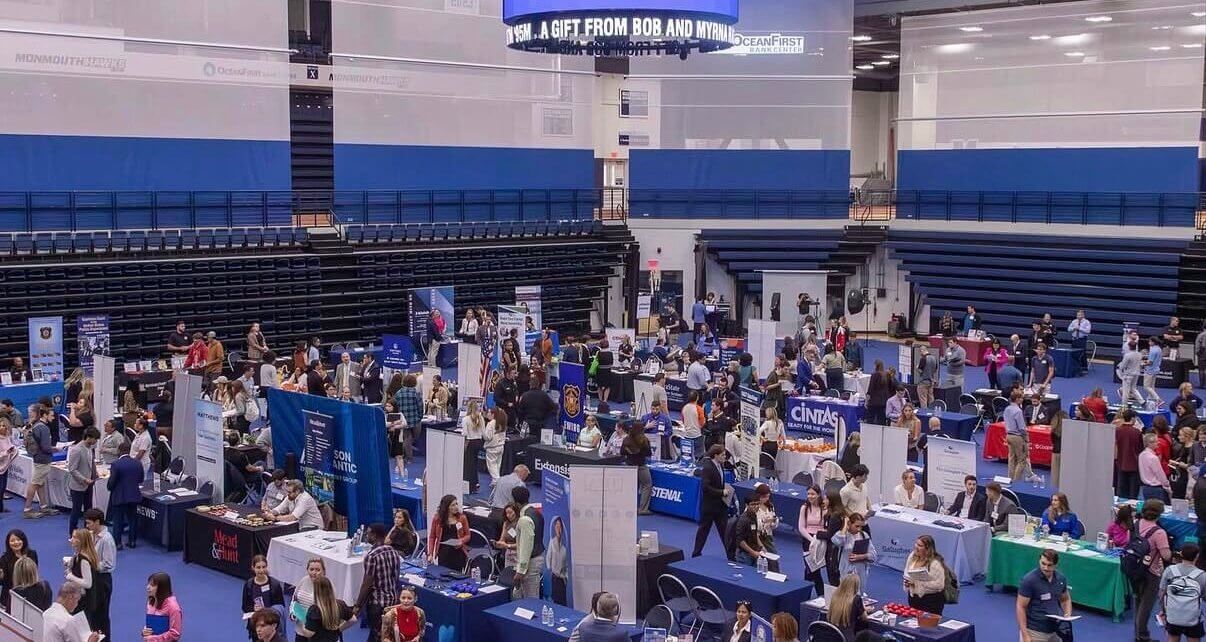
Both Bianchi and Kremer RSVP’d to the on-campus Career Fair which is hosted twice a year. It is there that they found their match.
Bianchi recommends dressing professionally for the occasion, printing out your resume, and talking to everybody. Kremer applied for the position later that day, secured an interview the following week, and officially started after finals week.
For Stojceski, someone from The Washington Center came to one of her classes when she was a sophomore and spoke about the opportunity, and a professor, Dr. Patten, encouraged students to intern with them as he had done once before.
The application process did not take long and she was accepted into the program within a couple of months. Then she spent the beginning of her summer searching within the program until she found a legal internship with Carrie Weletz.
Lessons From the Internship Search
As far as advice goes, all three students agreed that the most important thing you can do is simply put yourself out there.
“I would recommend going up and introducing yourself to anyone and everyone. You never really know unless you try. These opportunities help you figure out what you like and what you don’t like. Take things as a stepping stone and work hard on the side, but also utilize the resources that are here for you. A closed mouth doesn’t get fed,” said Bianchi.
Kremer, in unison with Bianchi, affirmed, “Just go for it and apply to as many internships as you can. The job market is intense and it’s best to put in as much effort as you expect back.”
Stojceski added, “Whether it’s cold emailing, which I highly recommend, searching on designated sites, or joining a program like The Washington Center, make yourself known.”
Resources, but not Always Access
For some students, having access to resources doesn’t necessarily mean that they are equally useful. Meet Layla Ohrvall, an out-of-state senior majoring in Nursing.
“The school helps students connect to hospitals, but they are mostly in New Jersey. We had Hackensack Meridian come in and talk to us during class and the Director of Nursing sends out emails regarding internship openings from areas all around New Jersey,” said Ohrvall. For her, interning at a New Jersey hospital would mean a commute of at least two hours, making it impractical.
Along with extensive coursework, nursing students begin clinicals at the start of junior year, adding another significant commitment to an already packed schedule. For students like Ohrvall who are out of state, pursuing an internship during the school year would be especially difficult.
The challenge isn’t a lack of resources, but rather the reality of her situation. While Monmouth University provides students with avenues to build connections, gain experience and prepare for life after college, those opportunities do not look the same for everybody.
Whether it is attending a Career Fair, replying to Handshake email invites, or following a professor’s advice, students must determine which resources best fit their circumstance.
As Bianchi, Kremer and Stojceski put it, sometimes the first step is merely putting yourself out there.